Motorcycle boom raises questions over licensing and road safety
On a busy Friday afternoon in the central business district, a delivery bike carefully weaves in and out between rumbling cars stuck in the city’s lunchtime traffic jam.
The cargo box mounted on the back of his red motorbike, is filled with packages destined for different locations outside the CBD.
His helmet is on. His phone, acting as a GPS device, rests in a holder on the handlebars. His eyes shift quickly as he tries to navigate through tight spaces to get past the traffic.
He is not alone. There are others just like him, eking out a living as messengers on two wheels, delivering orders and packages across town and into the city’s suburbs. They are popularly known as “bikers” and are the face of a booming urban economy that runs on just two wheels.
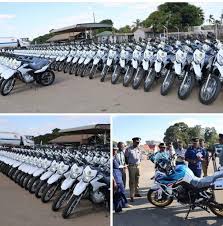
According to ZIMSTAT’s Fourth Quarter 2025 Transport Statistics Report, 1,486 motorcycles were registered for the first time during the quarter, a 33 percent increase from Q3.
Light vehicle registrations (cars, small vans, etc.) also rose by 18.4 percent, meaning 19,715 new vehicles were cleared to travel on Zimbabwe’s roads. Altogether, 21,201 new light vehicles and motorcycles were registered in Q4 2025.
The growth has raised questions about whether licensing, training, and enforcement systems are keeping pace with the expanding delivery sector. The delivery economy has arrived, but questions remain about whether the systems to manage it safely have kept up.
Why the boom?
Unemployment, urbanisation, and the rise of e-commerce have driven demand for fast delivery services. For many young Zimbabweans, motorcycle delivery work offers income when formal jobs are scarce.
The Legal Requirement
Zimbabwe law requires motorcycle riders to hold a valid Class A or A1 license before operating a motorcycle on public roads. A provisional learner’s license does not permit commercial delivery work. Riders who deliver goods without a full license are technically operating outside the law.
The official data from the Vehicle Inspectorate Department (VID) shows that the national pass rate for the Certificate of Competency test (the practical exam every driver must pass), stood at just 56.3 percent during Q4 2025. That means more than four out of every ten test takers failed.
For a delivery rider, the test is not only hard, but it is also expensive. Driving lessons cost money. The test fee costs money. Taking a day off to take the test means losing a day’s income. Many riders simply never attempt it.
The data also reveals a gap that no one is tracking. ZIMSTAT knows that 1,486 motorcycles were registered in Q4 alone. VID knows how many people passed their tests.
But no publicly available dataset connects motorcycle registrations to licensed riders. As a result, it is difficult to determine whether the growth in motorcycle ownership is being matched by the growth in licensed riders. This is not evidence of wrongdoing, but it’s simply a gap in what the public can know.
Within that gap is a rider named Tonderai.
A Rider’s Reality
Tonderai (not his real name) is a delivery biker who started working as a supermarket merchandiser before losing his job when the chain scaled down its operations in 2024. He resorted to biking after a relative offered him a rent-to-buy opportunity for a motorcycle. He has been in the delivery service for over a year, but he only possesses a provisional learner’s license. He is yet to take the practical driving test that would certify him as a legal motorcycle rider.
“The test fees are not cheap,” he said, wiping sweat off his forehead. “I can’t afford to take time off to go for the driving lessons, which are a requirement before taking the final test. Time is money. I need money, but I don’t have the time.”
“I know I need a license,” he admitted. “But as long as I haven’t been in trouble, I’ll continue to ride.”
Tonderai is not alone. Many bikers work on razor-thin margins. A day without riding equals a day without income. The choice between paying for a test and paying for food is not a choice he is ready to make.
While his situation reflects real economic pressure, road safety experts warn that unlicensed riding increases risk for both riders and other road users.
Safety Concerns on Two Wheels
The human cost of unlicensed riding is not theoretical. In January 2025 alone, four people died in two separate motorcycle crashes, one in Murehwa and another in Mukumbura, according to ZRP statements. In April 2025, one person died in a motorcycle crash when a hit-and-run motorcyclist struck and killed a pedestrian on the Mutoko-Chidye dust road and fled the scene. Police said the rider was never identified.
The Zimbabwe Republic Police has since identified motorcycles as among the vehicles frequently involved in serious accidents, alongside kombis and buses.
What the Traffic Safety Council Says
The Traffic Safety Council of Zimbabwe (TSCZ) Managing Director Mr. Munesu Munodawafa acknowledged the challenges posed by the motorcycle boom. He said Zimbabwe has sufficient training and testing capacity, but the real problem is non-compliance.
“Zimbabwe has enough capacity to train and license riders,” Mr. Munodawafa said. “Our studies have however revealed that the biggest challenge in this sector relates to non-compliance of set regulations.”
“With the increase in bikes as a model of transport, we need to step up our enforcement through those entities so mandated,” Mr. Munodawafa said.
The TSCZ has also taken practical steps to increase the safety of bikers on the road. The Council partnered with Total Energies last year to distribute free helmets in Makaha, Hurungwe, and Plumtree, accompanied by road safety refresher courses. The programme targets licensed Class A motorcycle riders. Mr. Munodawafa said the TSCZ is in advanced discussions to extend the project to other areas with additional resources from cooperating partners
A Customer’s Perspective
For those who use bikers like Tonderai’s services, the increase has brought both convenience and concern.
“These bikes have made life so much easier,” said Lucy, an accountant who works in Chisipite. “I hate going into town because of the traffic and the hassle of looking for parking marshals. Whenever I need something, I simply look it up online, contact the seller, pay using mobile money, and they deliver it via a biker.”
“However, I’ve seen how those guys ride, and it’s dangerous. They are not afraid to ride against traffic, not to mention going through red traffic lights to make the delivery on time. One time, a biker crashed into my side mirror, and he didn’t bother to stop. It happened so fast.”
Her experience is common. Step into Harare’s CBD during rush hour, and you will see delivery bikes slipping through gaps that do not exist.
Police Response
The Zimbabwe Republic Police has taken notice. ZRP Commissioner Paul Nyathi recently urged motorcyclists to stop fleeing from accident scenes.
“Fleeing an accident scene compounds tragedy,” he said. “Stop, assist victims, and report immediately to authorities.”
But for unlicensed riders like Tonderai, the fear of both the law and the loss of income make the temptation to flee override reasoning.
The Bigger Picture
The 1,486 new motorcycles registered in Q4 2025 represent real growth. People are buying bikes. Money is moving. Delivery work is providing jobs, no matter how modest.
But with growth comes responsibility. Every new motorcycle on the road needs a properly trained rider. For delivery riders like Tonderai, that means passing the Certificate of Competency test. For many, that test remains out of reach, not because they cannot ride, but because they cannot afford the time or the fees.
The government has taken steps. In 2023, the Ministry of Transport introduced new driver’s license regulations under Statutory Instrument 119/23, creating separate categories for motorcycles (Class A and A1) to align with SADC standards. The government acknowledged that riding a motorcycle requires distinct skills from driving a car.
The data shows motorcycles are becoming an increasingly important part of Zimbabwe’s transport and delivery economy. What remains unclear is whether rider training, licensing, and enforcement systems are expanding at the same pace. Until that gap is better understood, policymakers will continue balancing two competing realities: the economic opportunities created by the motorcycle boom and the road safety risks that can accompany rapid growth. Business Times