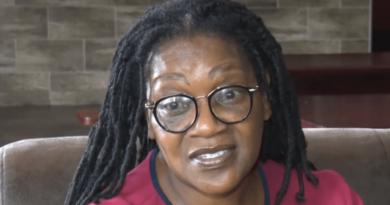

Woman (30) and Ministry of health accountant goes missing, mysteriously found decomposing in Harare lodge 5 days after death
HARARE – The quiet, manicured lawns of Tynwald Gardens & Lodges in Harare are usually associated with the joyous celebrations of roora ceremonies and weekend retreats. However, for five harrowing days in May 2026, the establishment became the silent witness to a tragedy that has left a family in Bikita shattered and a nation questioning the integrity of its investigative processes. The decomposing body of Precious Tariro Chimhundu, a 30-year-old accountant with the Ministry of Health and Child Care, was discovered in one of the lodge’s rooms, nearly a week after she had first been reported missing.
What initially appeared to be a straightforward missing person’s case has rapidly devolved into a complex web of allegations, conflicting timelines, and a desperate plea for a thorough investigation. The Chimhundu family, describing themselves as “grieved and confused,” has now taken the extraordinary step of petitioning Police Commissioner-General Stephen Mutamba. Their primary grievance is a chilling one: they believe the Zimbabwe Republic Police (ZRP) investigators have failed to properly probe what they are convinced is a cold-blooded murder.
Precious vanished on 20 May 2026. Her family, growing increasingly frantic as the hours turned into days, reported her missing at Kuwadzana Police Station. It was only on 25 May that the grim discovery was made. When her body was finally found, it was in an advanced state of decomposition, suggesting she had been dead for several days. The scene, according to the family, appeared to have been meticulously staged to resemble a suicide. Two small, empty containers of a foul-smelling chemical were found inside her handbag, and her mobile phone showed signs of significant tampering.
However, the scientific evidence tells a far more violent story. A post-mortem examination conducted at Parirenyatwa Group of Hospitals by a qualified pathologist concluded that Precious did not die from poisoning. Instead, the cause of death was recorded as head trauma, with intracranial haemorrhage listed as the secondary cause. This finding was subsequently reflected on her official death certificate issued by the Civil Registry Department. The medical evidence pointed to a severe blow to the head, yet the family claims that investigators continued to treat the matter as a suspected suicide.
“We were clearly informed that the death of our beloved one was not due to any natural causes [and] neither was it suicide,” the family wrote in their petition. They noted that the pathologist explained there was no sign of poisoning in her body, as her internal organs — the kidneys, liver, heart, and intestines — were all found to be normal. This, they argue, points towards a “99.9% probability of a hidden murder.
This is not the first musterious death to occur within Harare’s hospitality sector. In February 2026, the body of Rebecca Yeukai Nguruve, a 35-year-old nurse who had recently returned from the United Kingdom, was discovered in a room at the Jameson Hotel. Her death also left behind a trail of unanswered questions, highlighting a worrying trend of unexplained fatalities in the city’s hotels and lodges.
Furthermore, the Ministry of Health and Child Care, where Precious worked as an accountant, has been at the centre of several high-profile controversies in recent years. The ministry was famously rocked by a $60 million COVID-19 medical supply scandal in 2020, which resulted in the dismissal of the then-Health Minister, Obadiah Moyo. While there is currently no direct evidence linking Precious’s death to her professional duties, her family believes that her work and personal phone records could provide vital leads that the police have thus far failed to follow.
The investigation into Precious’s death appears to have reached a frustrating standstill. The family claims they were told by an investigating officer that the case was being transferred to CID Homicide, only to be informed a week later that there were plans to close the docket due to a lack of leads. This was despite the clear findings of the post-mortem report.
The family is beginning to suspect that the police may have been influenced by the lodge because they have failed to provide answers to the questions they have,” the petition stated. They even alleged that a police officer from Dzivarasekwa had asked them to perform a ritual at the lodge so the room could be cleaned and reused—a request they viewed as highly inappropriate given the unresolved nature of the case.
National police spokesperson Commissioner Paul Nyathi has confirmed that the authorities have received the family’s complaint. “We have received the complaint, and I want to assure you that the police are investigating the matter,” he stated. However, he added that it was “too early to give an update on the progress of the investigations.”
For those who knew Precious, she was a “very quiet lady,” a dedicated professional whose life was cut short in a manner that defies easy explanation. Her colleagues at the Ministry of Health remain in a state of disbelief. As the family continues their quest for justice, the questions remain: Who was Lawrence, and why did his story change? Why were the CCTV cameras facing the room conveniently out of order? And why, in the face of medical evidence pointing to head trauma, was the case initially treated as a suicide?
The Chimhundu family is not merely seeking closure; they are demanding the truth. Their petition is a call for a transparent and rigorous investigation that looks beyond the staged scenes and into the dark reality of a young woman’s final hours. In a nation where the echoes of past scandals often drown out the cries for justice, the case of Precious Tariro Chimhundu stands as a stark test for the Zimbabwean justice system.
The family’s plea is simple yet profound: that the life of a young accountant, taken in a room that should have been a place of rest, is not forgotten in a closed police docket. They want those responsible to be held accountable, and they want the world to know that Precious’s story did not end by her own hand, but by the hand of another.