
Kariba Ferry Tragedy: When Safety Warnings Were Ignored, Lives Were Lost
By Desire Tshuma
Kariba – The Lake Kariba ferry disaster has left Zimbabwe mourning a devastating loss of life while raising difficult questions about safety, accountability and the responsibility of public transport operators.
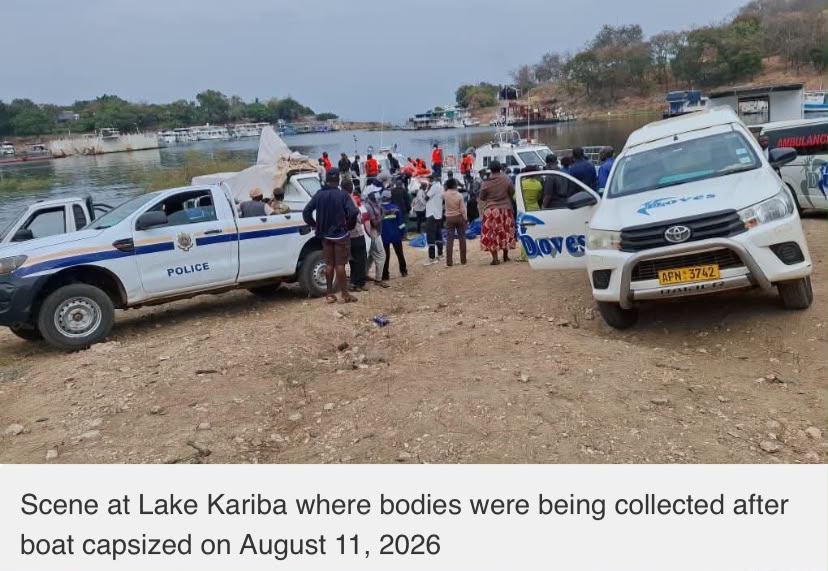
The Mbuya Nehanda capsized on Tuesday while travelling from Kariba towards Chalala fishing camps. Initial reports indicated that the vessel was carrying more passengers than its stated capacity when it was struck by a powerful wave.
According to figures released through the Civil Protection Unit, 77 people had been rescued, while 44 bodies had been recovered and several others were still missing. Ticket records showed that 114 adult passengers and five crew members were aboard, bringing the confirmed ticketed total to 119 people. The boat security put the number of passengers at 153.
However, authorities cautioned that an unknown number of children below the ticketing age could also have been on board, meaning the actual number of passengers may have been higher.
The rescue operation has continued as authorities search the vast waters of Lake Kariba for those still missing and work to establish the full circumstances surrounding the tragedy.
Among the issues now attracting public attention are allegations concerning the condition of the vessel, the number of people aboard, weather conditions and whether adequate safety procedures were followed before the boat set sail.
The captain has been identified as Captain Sign Patsikadova, who is also reported to be among those who perished in the disaster. However, his identity, role and the circumstances surrounding his death should be formally confirmed by the relevant authorities as investigations continue.
Accounts alleging that passengers expressed concern over the weather and the vessel’s condition have intensified calls for a thorough investigation. If established, any decision to proceed despite serious safety concerns would raise profound questions about operational judgment and the duty of care owed to passengers.
The disaster should therefore not simply be dismissed as an unavoidable accident.
A proper investigation must establish whether overcrowding, the vessel’s mechanical or structural condition, water ingress, safety procedures, crew decisions and severe weather combined to create the circumstances that led to the capsizing.
Public transport operators, whether operating buses, boats or other passenger services, have a fundamental responsibility to protect human life. A passenger entrusts their life to an operator with the expectation that every reasonable safety measure will be taken.
No timetable, fare, business interest or journey should ever be placed above human life.
The Kariba tragedy has also prompted intervention from President Emmerson Dambudzo Mnangagwa, as Government responds to the disaster and the ongoing rescue and recovery efforts.
The tragedy has further attracted international solidarity. The Embassy of China and the Embassy of the State of Palestine have conveyed condolences to Zimbabwe following the loss of life, joining the nation in mourning the victims.
The tragedy should now become a turning point for Zimbabwe’s maritime transport sector.
Authorities need to scrutinise vessel certification, maintenance standards, passenger capacity enforcement, crew training, emergency equipment, weather monitoring and the procedures used to determine whether a vessel is safe to leave harbour.
Where negligence or violations of safety regulations are established, those responsible must face the law.
At the same time, the families of those who died deserve compassion, accurate information and justice. The search for answers must not be driven by speculation, but neither should legitimate questions be ignored.
The loss of innocent men, women and children on Lake Kariba is a painful reminder that safety cannot be negotiated and human life cannot be treated as expendable.
May the souls of all who perished aboard the Mbuya Nehanda, including those who were working to transport their fellow citizens, rest in peace.
Their deaths must not be in vain.