Stanbic, Ele-Collection Join Forces to Turn Plastic Waste into Jobs in Victoria Falls
By Desire Tshuma
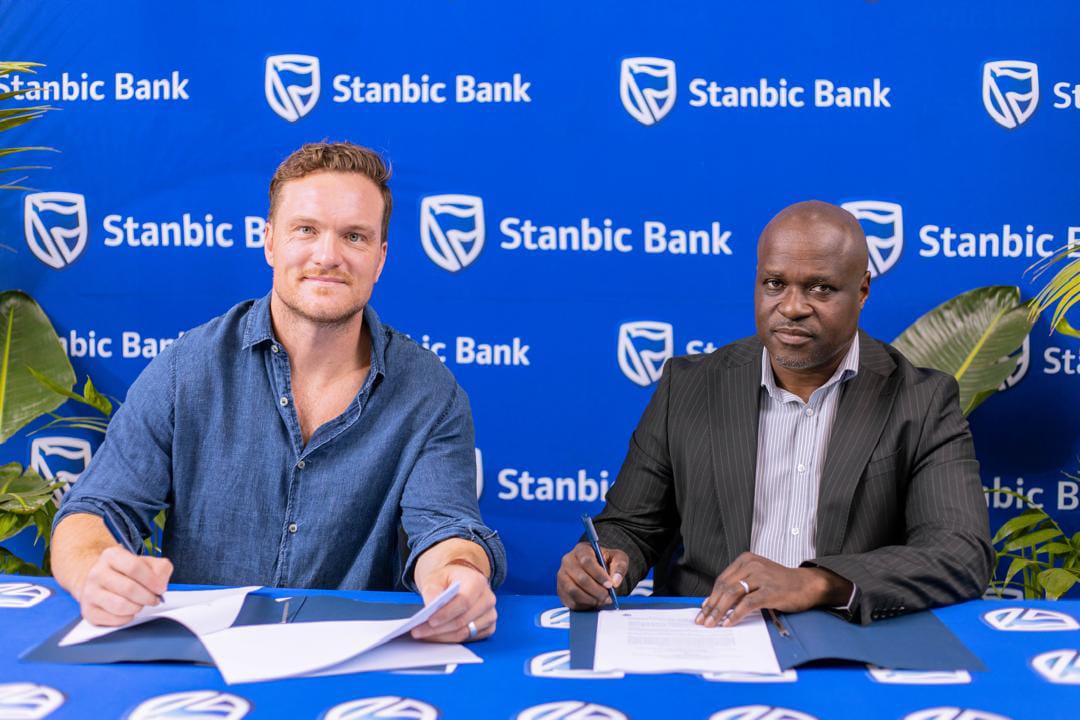
Victoria Falls – Stanbic Bank Zimbabwe has partnered with conservation organisation Ele-Collection in a one-year revolving agreement aimed at tackling plastic pollution while creating sustainable employment opportunities for women in Victoria Falls.
The partnership brings together environmental conservation and livelihood creation, with Ele-Collection employing women to collect discarded plastic from the environment before processing it into aggregate for concrete production.
The initiative is seeking to address the growing threat posed by plastic waste to wildlife while providing alternative sources of income for communities living around the resort city, where human-wildlife conflict and limited employment opportunities remain a concern.
Ele-Collection chief executive officer Simon Teede said the organisation was established following a near-death encounter with an elephant in Victoria Falls, one of three separate elephant attacks reported in the area that month.
Teede said two people were killed in the other incidents, while he and others involved in his encounter survived.
He said the incident later took on a deeper environmental significance after the elephant was put down and a significant amount of plastic waste was reportedly found in its stomach. The discovery, he said, highlighted the growing danger posed by unmanaged plastic waste to wildlife and communities.
“Ele-Collection employs unemployed women who collect all types of plastic, even dirty, contaminated waste, which we then process into aggregate for concrete,” Teede said.
He said independent testing had established that the recycled product exceeded industry standards and had received certification from the Standards Association of Zimbabwe, PPC Cement and DuraCrete for use in commercial concrete applications.
The initiative has also created a direct income stream for women involved in plastic recovery.
“Our collectors now earn $8-10 per day recovering plastic from the bush. That’s transformational income. That’s food security. That’s a livelihood that didn’t previously exist,” Teede said.
Stanbic Bank has committed to funding the recovery of 36 tonnes of plastic during the year, equivalent to approximately 3.6 million 500ml plastic bottles.
So far, nine tonnes of plastic have been collected under the partnership in three months, resulting in an estimated 26.1 tonnes of emissions being avoided — an environmental benefit equivalent to planting about 435 urban tree seedlings.
Stanbic Bank Head of Business and Commercial Banking Patson Mahatchi said the bank was pleased to support an initiative that combined environmental sustainability with community empowerment.
“Our institution supports tourism in a big way, hence we call Victoria Falls our home. It is thus fitting that this initiative resonates perfectly with our drive to achieve sustainability while serving the communities in which we operate,” Mahatchi said.
He said the project was particularly important because it created a self-sustaining alternative source of income for women while potentially reducing reliance on subsistence poaching in the region.
The partnership comes at a time when conservationists are increasingly calling for innovative approaches that protect wildlife while ensuring communities living alongside protected areas benefit economically from conservation.
By turning discarded plastic into an income-generating resource, Stanbic and Ele-Collection are seeking to demonstrate that environmental protection and economic empowerment can be pursued simultaneously.