
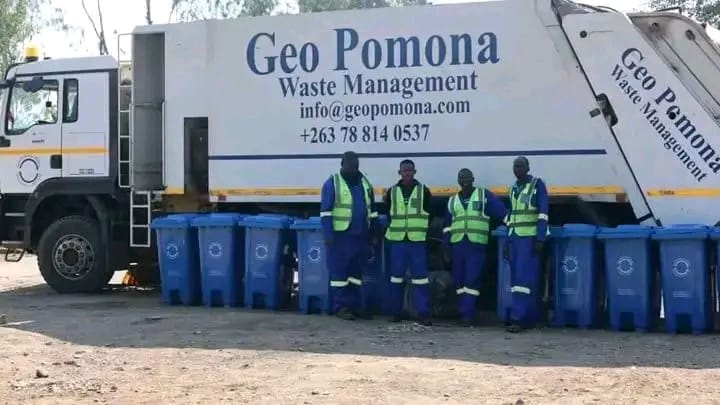
WASTE DEAL UNDER FIRE AS BULAWAYO CIVIL SOCIETY DEMANDS ANSWERS
By Desire Tshuma
BULAWAYO — A proposed long-term waste management deal between the City of Bulawayo and Geo Pomona Waste Management has come under scrutiny, with civil society organisations demanding answers over the procurement process and warning authorities against using the Ngozi Mine crisis to sidestep legal safeguards.
The organisations and residents say they support urgent intervention at Richmond Landfill, popularly known as Ngozi Mine, but insist that the environmental and public-health emergency cannot become a licence to abandon procurement laws, transparency and accountability.
Their demands come after a reported directive issued following the September 10 visit to Bulawayo by the Minister of Local Government and Public Works, requiring the city to finalise a Memorandum of Agreement with Geo Pomona within a week.
The civil society groups want authorities to publicly spell out the legal and procurement route being used to secure the proposed deal. They are particularly demanding clarity on the status of Expressions of Interest, evaluations, recommendations and any decisions already made in relation to the proposed arrangement.
At the centre of the dispute is the Public Procurement and Disposal of Public Assets Act [Chapter 22:23], which governs public procurement by local authorities. The organisations acknowledge that the law allows alternative procurement methods in specified circumstances, but argue that any departure from competitive bidding must be legally authorised, properly justified and fully compliant with procurement legislation.
They also rejected any suggestion that a ministerial directive automatically overrides procurement obligations. While acknowledging the Minister’s statutory supervisory powers over local authorities, the groups said public officials and accounting officers remained bound by the law. They cited Section 16 of the PPDPA Act, which provides an accountability mechanism where an accounting officer is directed by a minister or another person in authority to undertake procurement action the officer believes does not comply with the Act.
The organisations said the key issue was not whether Geo Pomona should or should not provide the service. Rather, they want the authorities to demonstrate that the company was selected through a process that is lawful, transparent and capable of withstanding public scrutiny.
“If Geo Pomona represents the best technical, environmental and financial solution for Bulawayo, a lawful and transparent process should be capable of demonstrating this to residents,” the groups said.
They are also demanding disclosure, where permitted by law, of the proposed contract’s duration and scope, financial implications, funding model, obligations of the parties, service-delivery standards and ownership and control of infrastructure.
The groups further warned against conflating emergency intervention at Ngozi Mine with the procurement of a long-term waste management contractor. They said immediate measures to protect public health and the environment — including pollution mitigation, environmental rehabilitation and rescue and recovery efforts — should continue while authorities address the legal and technical requirements for a sustainable long-term solution.
The organisations have called on the City of Bulawayo, the Ministry of Local Government and Public Works, the Procurement Regulatory Authority of Zimbabwe (PRAZ) and other relevant authorities to ensure that no binding long-term agreement with Geo Pomona or any other service provider is concluded before all legal, procurement and governance requirements are satisfied.
They also want authorities to clarify whether the proposed arrangement is being pursued through competitive bidding, restricted tendering, direct procurement, a public-private partnership or another legally recognised mechanism.
The groups called for affected stakeholders to be involved before the city assumes substantial long-term financial or service-delivery obligations, where required by law and good governance. They warned that the Ngozi Mine crisis should not be allowed to become a justification for bypassing safeguards intended to protect public resources.
“Bulawayo needs both urgency and accountability,” the organisations said.
The statement was endorsed by the Bulawayo Waste Management Traders Association, Constitution Defenders Forum, Cowdray Park Residents, Defend The Constitution Platform, Freedom Alliance, Habakkuk Trust, Matabeleland Institute for Human Rights, National Youth Development Trust, Public Policy Research Institute of Zimbabwe, Street Wise Informal Association, Ukuthula Trust and Zimbabwe Human Rights Association.


