
MASUKA DRIVES SIX-PILLAR DROUGHT RESPONSE
By Admire Chitsungo
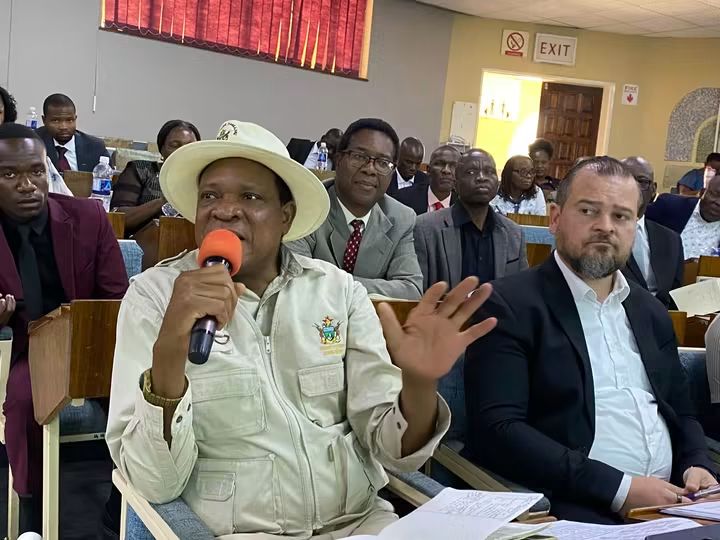
KADOMA. Agriculture, Mechanisation and Water Resources Development Minister Dr Anxious Jongwe Masuka has taken the lead in driving Zimbabwe’s Six-Pillar Drought Response Plan, convening a high-level coordination meeting to translate national policy into practical interventions to safeguard food security and agricultural livelihoods.
The interactive meeting, held in Kadoma today, brought together Minister of Lands and Rural Development Hon Vangelis Haritatos, Ministers of State for Provincial Affairs and Devolution, provincial agricultural directors, chief directors and senior agricultural officials.
Minister of State for Provincial Affairs and Devolution for Mashonaland West, Hon Marian Chombo, delivered the opening remarks.
The engagement follows Cabinet’s adoption of the Six-Pillar Drought Response Plan and comes against the backdrop of the 2026/2027 rainfall outlook, which points to below-normal rainfall across the country.
The meeting is aimed at strengthening coordination and ensuring that national preparedness measures are effectively cascaded to provinces, districts, wards and communities.
The meeting therefore provides a critical link between national policy and implementation on the ground, ensuring that provincial and district structures remain aligned, prepared and responsive to the needs of farmers as the agricultural season unfolds.
At the centre of the Government’s response are six interconnected pillars covering enhanced strategic grain reserves, accelerated climate-smart agricultural production, an integrated financing architecture, livestock drought mitigation, enhanced imports, and coordination, early-warning systems and capacity-building.
The interventions are designed to strengthen national preparedness, sustain agricultural production, protect livestock and livelihoods, and safeguard food security amid anticipated rainfall challenges.
The plan also places emphasis on grassroots engagement, with President Emmerson Mnangagwa expected to communicate directly with Chiefs, Headmen and Village Heads to strengthen the flow of preparedness information from national leadership to communities.
This approach is intended to ensure that communities receive timely information and are better positioned to respond to the anticipated drought conditions.
The Government’s thrust is clear: preparedness, not panic.
Through early planning, broad-based coordination, climate-smart production and strengthened support systems, the country is seeking to protect livelihoods while keeping agricultural production on course.
The meeting marks a key step in aligning national drought response measures with implementation structures across the country, as Zimbabwe prepares for the 2026/2027 agricultural season.


