Bulawayo beware of Geo Pomona scandal — Harare surrendered its dumpsite
The Geo Pomona scandal is a warning to every Zimbabwean city. Harare surrendered its main dumpsite under a 30-year agreement and must now pay Geo Pomona US$40 per tonne of waste — potentially US$40,000 a day or US$14.6 million annually.
The company is publicly fronted by Delish Nguwaya, while its Netherlands-registered parent has been linked to Albanian businessman Mirel Mertiri. There are also persistent allegations that politically connected members of the Mnangagwa family are the real beneficiaries.
Refuse collection is a basic municipal service. Instead of paying millions every year to a private company, Harare could purchase and maintain its own fleet, employ its own workers and retain control of its dumpsite.
Geo Pomona was handed the site on highly favourable terms and guaranteed payment even when Harare failed to deliver the stipulated tonnage. When councillors tried to cancel the arrangement, central government intervened and forced it to continue.
Now the government wants to export the same corruption-laced model to Bulawayo. Acting with extraordinary haste, Local Government Minister Daniel Garwe reportedly gave the council one week to reach an agreement with Geo Pomona — even though Bulawayo was already running its own procurement process.
Mayor David Coltart has pushed back, saying any agreement would require the approval of the full council following extensive consultation with residents. An environmental crisis must never become an excuse to bypass elected councils, competitive tendering and public scrutiny.
This is not Nguwaya’s first controversial public procurement deal. He was Drax International’s representative in Zimbabwe during the 2020 COVID-19 procurement scandal, involving contracts reportedly worth up to US$60 million for medicines, testing materials and personal protective equipment — allegedly awarded without competitive tender and at heavily inflated prices.
The fallout led to the arrest and dismissal of Health Minister Obadiah Moyo, while Nguwaya was also arrested. Their cases were subsequently dismissed or set aside by the courts, but the political questions never disappeared.
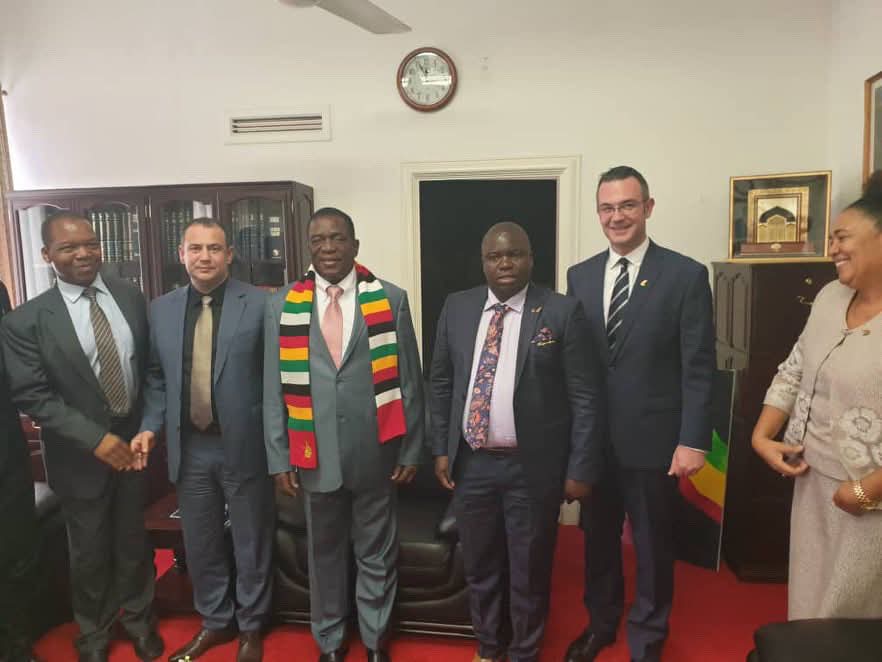
The internet is littered with photographs of Nguwaya alongside President Emmerson Mnangagwa, First Lady Auxillia Mnangagwa, Collins Mnangagwa and other members of the First Family. While photographs alone do not prove criminal wrongdoing, they make attempts to portray him as an ordinary businessman without privileged access to the First Family extremely difficult to believe.
Interestingly, in August 2017 — just months before the military coup that brought Mnangagwa to power — Nguwaya was dramatically arrested at the Harare Magistrates’ Court. At the time, he was described as a self-proclaimed Central Intelligence Organisation (CIO) informer and was due to appear in court over allegations of possessing cocaine.
While waiting to take the stand, top detective Joseph Nemaisa and his team moved in to arrest him on a separate matter. Nguwaya resisted being handcuffed and was wrestled to the ground in dramatic scenes captured on video. A High Court judge subsequently ordered his release and strongly criticised the manner in which the police had arrested him.
Given Mnangagwa’s long history at the heart of Zimbabwe’s state-security establishment, Nguwaya’s apparent access to the First Family and his extraordinary rise to the helm of companies benefiting from highly controversial government contracts, the questions ask themselves.
To top everything and kuti “zvityise” as we say, Mnangagwa appointed Nguwaya as Special Advisor to the President on Waste Management and Environmental Sustainability. *_-Bulawayo24_*