
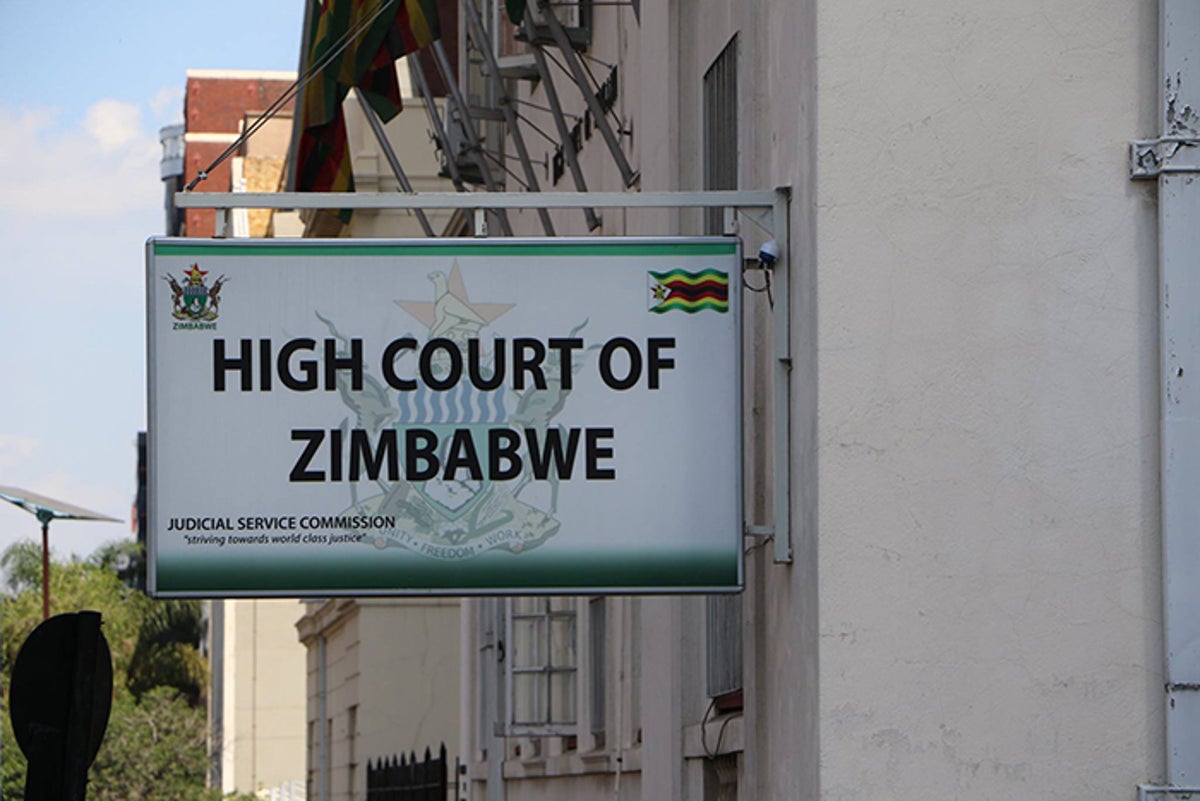
High Court rules on mammoth US$1.3m money laundering case
By Staff Reporter
Former Managing Director of Assa Abloy Zimbabwe (Private) Limited, Clive Majoni, has been convicted of fraud and money laundering after diverting Treasury Bills valued at over US$1,38 million meant for his former employer.
He was found guilty on both counts by High Court Judge, Justice Kwenda on Friday following a full trial and was remanded to 16 October 2026 for sentencing.
Majoni, who had been employed as Managing Director of Assa Abloy Zimbabwe (Private) Limited, had his contract terminated on 4 November 2020.
However, on 13 May 2022, well aware that he no longer had authority to act on behalf of his former employer, Majoni wrote a letter to the Reserve Bank of Zimbabwe on the company’s letterhead.
He instructed the central bank to transfer Treasury Bills issued in settlement of the company’s legacy debt to a CBZ account held in the name of Chubb Security (Private) Limited, a company he had established.
The Treasury Bills were subsequently issued to Chubb Security, and Majoni disposed of them at a 50 per cent discount for US$690,959.
The money was not recovered, but the court established that he used it to acquire two motor vehicles for Chubb Security (Private) Limited.
In Zimbabwe,T-Bills are short-term debt instruments issued by the government through the Reserve Bank of Zimbabwe (RBZ) to raise money for various state requirements and to manage the country’s money supply.
Here are the key characteristics of Treasury Bills in the Zimbabwean context:
Purpose
The Zimbabwean government uses T-Bills for fiscal financing to fund the national budget deficit or specific government projects.
Historically, these have included initiatives like Command Agriculture abused by businessman Kuda Tagwirei who mishandled US$ 3 billion.
Monetary Policy
To regulate liquidity within the banking system. By selling T-Bills, the RBZ mops up excess cash from the market to help curb inflation.
Issuance and Maturity
They are issued by the RBZ on behalf of the Ministry of Finance, Economic Development, and Investment Promotion.
Tenure
They are short-term investments, usually with maturity periods varying.
Auction System: Since 2019, Zimbabwe has largely moved toward an open auction system where banks and other financial institutions bid for these bills, helping to determine market-driven interest rates.
How They Work
Discounted Basis T-Bills are typically sold at a discount to their face value. For example, an investor might buy a bill worth $1,000 for $950. The $50 difference serves as the interest earned when the government pays back the full $1,000 at maturity.
While they are primarily bought by commercial banks, insurance companies, and pension funds, they are also available to individual investors. They are often used by banks to meet their “statutory liquid asset” requirements (the amount of cash or near-cash they must hold by law).
In recent years, the Zimbabwean government has been careful with the issuance of T-Bills to avoid the hyperinflationary pressures seen in the past. Under current policies, the government aims to ensure that T-Bill issuance stays within budget limits and that interest rates are high enough to encourage investment while keeping inflation in check.