
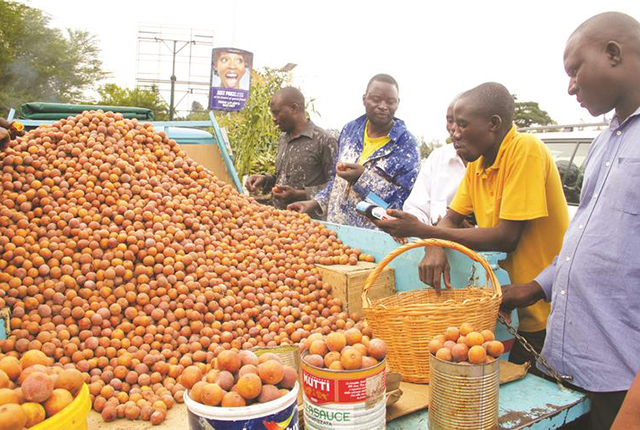
‘Leave mazhanje alone!’ — Scholar blasts government over wild fruit tax*m
A fierce debate has erupted over the taxation of wild fruits, with academic and commentator Dr Masimba Mavaza condemning the move as an attack on poor rural families who depend on mazhanje and other indigenous fruits for survival.
In a strongly worded opinion article, Mavaza argued that taxing mazhanje was unfair and insensitive, describing the fruit as a traditional source of food and income for vulnerable communities.
He said wild fruits such as mazhanje, matohwe, matamba, marula and muuyu had sustained rural families for generations, particularly during droughts and periods of food shortages.
Mavaza argued that many villagers, especially women and elderly people, collected and sold the fruits to raise money for basic necessities, including food, soap and school fees.
He warned that imposing taxes on such small-scale activities would further burden people already struggling with poverty.
“**Mazhanje is not a luxury. Mazhanje is survival. Mazhanje is life,**” he declared.
Mavaza also invoked African cultural traditions, arguing that wild fruits had historically been regarded as communal resources that should be accessible to everyone, including the poor, orphans and widows.
He questioned the justification for taxing fruits that grow naturally in forests without being planted or cultivated by those who collect them.
The commentator further drew parallels with the colonial era, arguing that taxing wild fruits represented a return to systems that placed heavy economic burdens on ordinary Africans.
He claimed that even the colonial administration had not taxed wild fruits, describing the proposed levy as a troubling development in an independent Zimbabwe.
Mavaza also challenged traditional leaders, including chiefs, headmen and village heads, to speak out against the tax, saying they had a responsibility to protect communal resources and defend vulnerable villagers.
He called for traditional leaders to petition the Government and Parliament to have the measure removed.
While maintaining that he was not opposed to taxation in general, Mavaza insisted that taxing wild fruits would cross a moral boundary by targeting people who rely on nature for their livelihoods.
“**You cannot tax what God gave for free. You cannot tax what the ancestors protected. You cannot tax what the poor survive on,**” he argued.
His remarks come amid growing public debate over the taxation of mazhanje sellers, with concerns being raised about the impact of the measure on informal traders and rural households.
Mavaza urged authorities to reconsider the move, insisting that wild fruits should remain accessible to communities without additional financial burdens. *_-ZimEye_*