
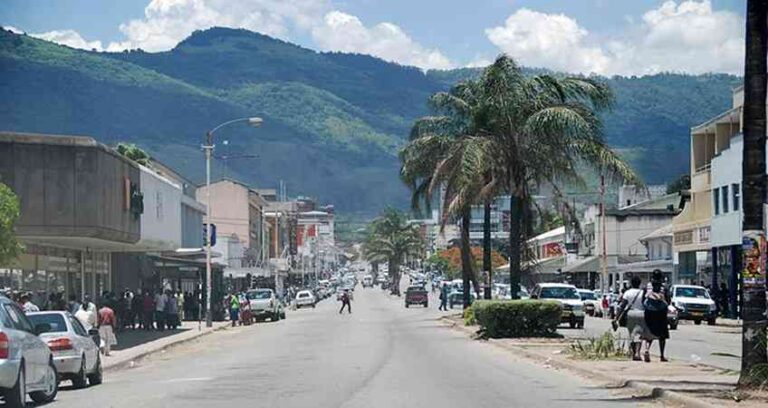
2025: The Year That Changed Manicaland
By Chiyedzo Josiah Dimbo – Ambassador of Hope
With the hosting of the 17th edition of the Sanganai/Hlanganani World Tourism Expo and the 22nd ZANU PF National People’s Conference, Manicaland Province enters a new era of economic promise, national recognition, and infrastructural revival.
In 2025, Manicaland Province etched its name in history — not just as a picturesque tourist destination, but as a centre of national significance, political activity, and developmental momentum. This year alone, Manicaland hosted two of Zimbabwe’s most high-profile national events: the 17th edition of the Sanganai/Hlanganani World Tourism Expo and 22nd ZANU PF National People’s Conference.
For a province known for its misty mountains, fertile valleys, and charming scenery, this double honor marks a new chapter — one of transformation, recognition, and economic upliftment.
A Jewel of the East
Home to some of Zimbabwe’s most iconic attractions — including the Mtarazi Falls, Vumba Botanical Gardens, Mount Nyangani, and the legendary Birchnough Bridge — Manicaland has always been a province of untapped potential. These natural wonders have quietly attracted nature lovers, hikers, and tourists over the years, but 2025 placed the province squarely on the national and international map in a new, dynamic way.
17th Sanganai- Kumbanayi Expo Makes History
In 2025, the Sanganai/Kumbanayi World Tourism Expo reached its 17th edition, and for the first time since its inception, the event was hosted outside Bulawayo — finding a new and vibrant home in Mutare.
The event marked a turning point in Zimbabwe’s tourism calendar, with thousands of local and international exhibitors, buyers, and media converging in Manicaland. Hotels were fully booked. Informal traders, restaurants, transporters, and cultural performers enjoyed a spike in business. For the first time, Manicaland’s unique tourism offering received the spotlight it truly deserves.
The relocation of Sanganai/Kumbanayi to Mutare was both a strategic decentralisation move and a recognition of Manicaland’s capacity to host world-class events.
22nd ZANU PF National People’s Conference: Mutare Takes Centre Stage
Now in its 22nd edition, the ZANU PF National People’s Conference — the highest policy-making event outside Congress — is set to be held in Mutare, bringing together over 7,000 delegates from Zimbabwe’s ten provinces and foreign branches of the party.
This year’s edition carries special significance. Hosting it in Manicaland not only affirms the province’s central role in the national political landscape, but also provides an unprecedented boost to infrastructure, local business, and provincial visibility.
The conference is expected to transform Mutare temporarily into a political and economic capital — a phenomenon witnessed in previous host cities like Bindura, Gweru, and Esigodini. However, this time, the attention turns to Zimbabwe’s eastern border city, and it is rising to the occasion with confidence.
Provincial Impact: Beyond Events, Towards Legacy
Hosting two mega-events in one year is no small feat. The impact is being felt at every level of society:
Roads and facilities are being upgraded.
Temporary employment is being created for youth and skilled workers.
Hospitality and retail businesses are booming.
Tourism marketing is reaching new heights.
Crucially, the spotlight is not just on Mutare city — rural communities, informal traders, artists, and farmers are all participating in the economic and cultural spinoffs.
A Province on the Rise
These two milestone events — the 17th Sanganai/Hlanganani Expo and 22nd ZANU PF National People’s Conference — have turned 2025 into a defining year for Manicaland.
For decades, Manicaland was seen primarily as a quiet, beautiful province tucked away in the East. This year, that narrative has changed. The province is no longer just scenic — it is strategic. It is no longer just peaceful — it is powerful.
Well done, Manicaland
2025 will be remembered as the year Manicaland found its voice, stepped onto the national stage, and proved its readiness to contribute meaningfully to Zimbabwe’s development trajectory.
To the people of Mutare and Manicaland at large — from the vendors and organisers to the youth volunteers and cultural performers — well done. You have redefined what’s possible. You have set a standard.
The story of this province has changed — and it’s only just beginning.