
Vampire-Style Ritual Killing of e-Hailing Driver Echoes the Dark Horror of Guruve
By News Editor
Kudzai Jakachira
HARARE — It is the kind of script Hollywood rejects for being too far-fetched, too gratuitously violent, too intensely dark. A man drives into the night to earn a living. He is betrayed by a friend. His throat is slit, his blood consumed, and his body dumped in a shallow grave among the tombstones of Warren Hills Cemetery.
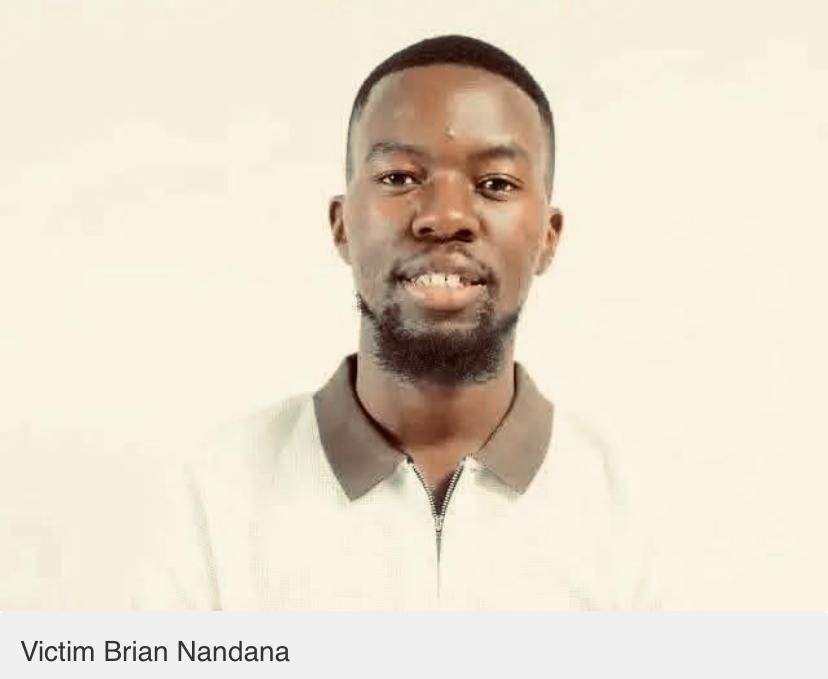
But this is not a psychological thriller playing on a cinema screen. This is the terrifying reality of Harare in 2026. And for Zimbabweans with a memory for horror, it carries a sickeningly familiar rhythm. The gruesome execution of 30-year-old e-hailing driver Brian Nandana (pictured) reads like a modern copycat of the country’s most chilling nightmare: the ritualistic butcheries of the Guruve serial killer, Anymore Zvitsa.
The arrest of 28-year-old Shepherd Severa has shattered the collective psyche of our community. It has forced us to confront a deeply unsettling truth: we are no longer just dealing with a rise in standard urban crime. We are sharing our streets, our commuter omnibuses, and our neighborhoods with individuals operating on a level of unhinged, ritualistic cruelty that defies human comprehension.
For generations, Zimbabwean society has been anchored by Unhu or Ubuntu—the fundamental belief that “I am because we are.”
The murder of Brian Nandana completely incinerates that trust, echoing the exact, insidious methodology that Zvitsa used to terrorize Mashonaland Central. Brian did not fall victim to a random hijacking by desperate, masked men. Much like Zvitsa’s victims, who were lured into isolated traps under the guise of familiar companionship or business offers, Brian was betrayed by a friend.
He was lured to his death by someone who knew his name, someone who likely sat at his table, someone who looked him in the eye before allegedly using a kitchen knife to slit his throat.
When friendship becomes a fatal trap, where does the ordinary citizen turn for safety? The psychological toll on the community is profound. The terrifying realization is that the ultimate evil doesn’t always wear a monstrous mask; sometimes, it wears the familiar, calm face of a companion—the exact camouflage Anymore Zvitsa used to walk among his victims unnoticed before drawing his blade.
What makes this nightmare truly paralyzing is the revelations regarding the suspect’s background. Police have confirmed that Severa is linked to three unresolved murders in Bulawayo dating back to 2020, alongside a 2021 warrant of arrest for an armed robbery in Milton Park.
Think about that timeline. For six years, a suspected serial killer has been casually walking among us.
This multi-city trail of blood mirrors the nomadic horror of the Guruve apex predator. While ordinary citizens were going to work, raising children, and trying to survive the daily grind, a man with a trail of bodies behind him was navigating the very same streets. He was buying groceries at the same supermarkets. He was blending in seamlessly, a ghost in the system, moving from city to city, changing jurisdictions to evade the law, waiting for his next harvest.
This “movie-style” execution—complete with the stomach-turning allegation of the suspect drinking the victim’s blood—points to a profound and chilling psychological detachment. Like the dark ritualism associated with Zvitsa’s crimes, where life was extinguished not just for material gain but for a gruesome, esoteric purpose, Severa’s actions signal a terrifying breakdown in the moral fabric of our society.
The tragedy also exposes the raw vulnerability of our everyday lives. Brian Nandana was an inDrive worker, a member of the gig economy trying to make an honest living in a difficult economic climate. Like thousands of honest Zimbabweans, he braved the dangerous, dark hours of the night to provide for his family.
His death sends a chilling message to every taxi driver, every vendor, every late-night worker, and every ordinary citizen: you are exposed.
“We are no longer safe anywhere,” says a traumatized Warren Park resident, wiping away tears near the cemetery boundaries. “If a friend can do this to you, if a man can kill three people in another city and just move here to do a Guruve-style killing in the capital, then who is protecting us? We are living in fear.”
We cannot afford to look at the Warren Hills tragedy as an isolated incident of madness. It must be treated as a stark, terrifying wake-up call. It highlights a critical failure in our law enforcement tracking systems that allowed a multi-city murder suspect to remain at large for over half a decade, mimicking the gaps in rural-urban policing that serial killers historically exploit.
More than that, it is a mirror held up to a society that is becoming increasingly desensitized to violence. When crimes transition from the realm of urban theft to cinematic, vampire-style butcheries, the community is no longer just facing a crime wave—it is facing an existential crisis of safety.
The gates of Warren Hills Cemetery have closed on Brian Nandana, a young man who deserved a full life. But for the rest of Harare, the nightmare continues. As we lock our doors tonight, we are left with the chilling realization that the ghosts of Guruve have migrated to the capital. The monsters we used to watch on television are no longer confined to history or the screen. They are living right next door.