“Death Trap On The Road To Harare”: Over 50 Commuters Packed Onto Haulage Truck At Mvuma
By Desire Tshuma
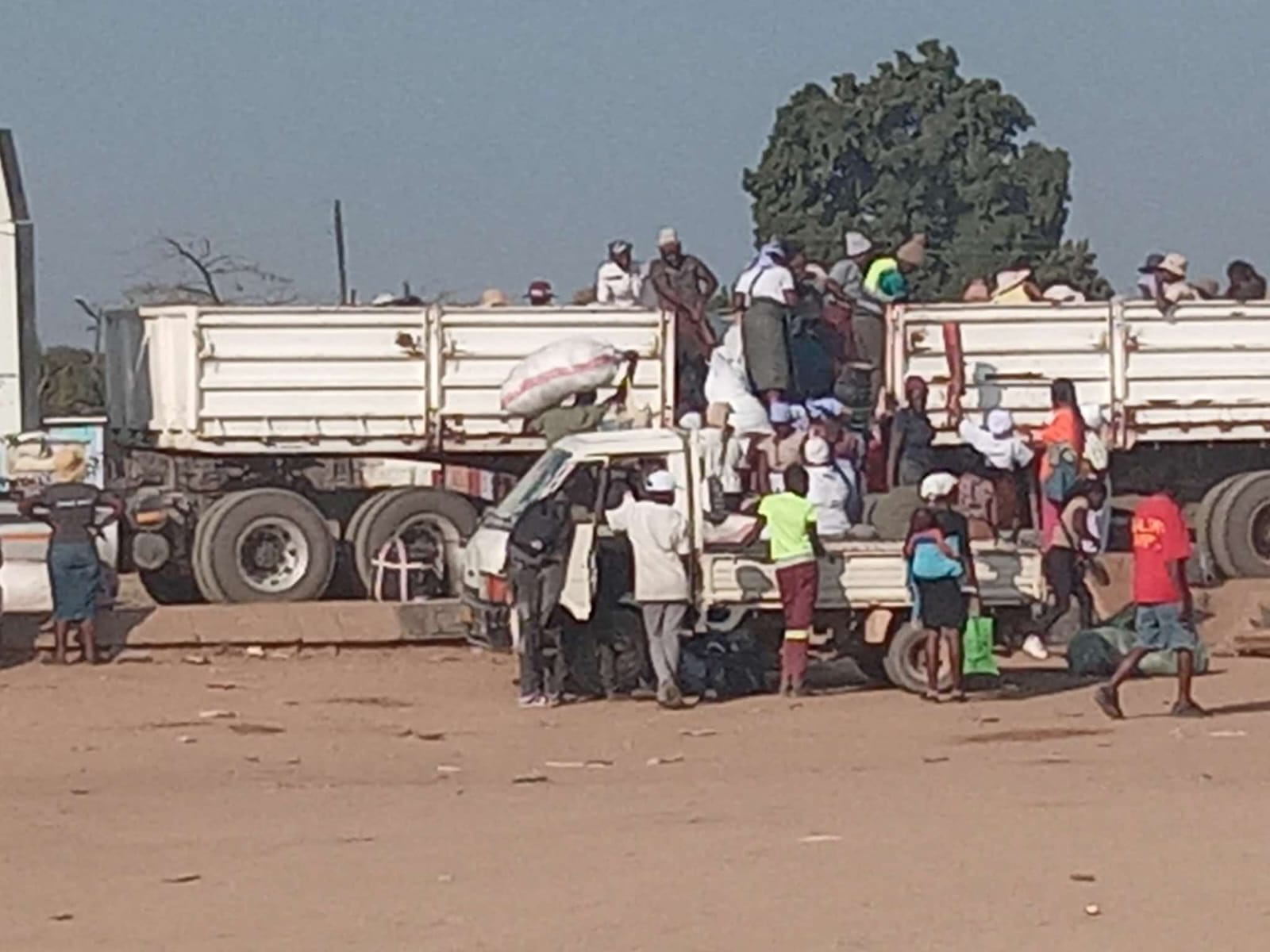
MVUMA — More than 50 commuters, including women and children, reportedly packed onto the open trailer of a haulage truck at Fairfields in Mvuma on Saturday, raising fresh alarm over dangerous transport practices barely days after Zimbabwe was rocked by a deadly road disaster.
The passengers were seen crammed into the truck’s cargo section, with some sitting on bags and luggage while others loaded their belongings as the vehicle prepared to travel towards Harare.
The incident has reignited concerns over the desperate measures commuters are resorting to in search of transport, particularly at busy rural transit points where passenger demand can overwhelm available buses.
Haulage trucks are designed to carry goods, not passengers. Travelling in an open cargo compartment leaves commuters dangerously exposed to serious injury or death in the event of sudden braking, a collision or a vehicle overturning.
Yet for some travellers, the decision to board such vehicles is driven by limited options, with conventional public transport often scarce, overcrowded or beyond their means.
“Buses are few and they fill up fast. If you miss one, the only way to get to Harare today is to get on these trucks. We know it’s dangerous, but what choice do we have?” said one traveller.
The disturbing development comes in the wake of the Chivhu road tragedy, which claimed 30 lives and prompted President Emmerson Mnangagwa to declare a State of Disaster.
The tragedy has intensified scrutiny of Zimbabwe’s road safety situation, particularly the use of unsafe and illegal passenger transport arrangements.
The Zimbabwe Republic Police and the Traffic Safety Council of Zimbabwe have repeatedly warned motorists against carrying passengers in goods vehicles, with offenders liable to arrest and other penalties. However, enforcement remains a major challenge at rural growth points and transport hubs where commuters frequently turn to unconventional means of transport when conventional services are unavailable.
Road safety advocates say the Fairfields incident exposes a dangerous combination of inadequate public transport, economic hardship and the growing normalization of risk.
“We cannot keep mourning lives lost and then watch the same scenes play out the next week,” said a Harare-based road safety advocate. “Government, transport operators and communities must work together to provide safer alternatives, while commuters must also understand that boarding these death traps can have irreversible consequences.”
The latest incident has also revived the chilling phrase, “Another Mbuya Nehanda at play,” a reference to the devastating consequences of preventable transport disasters.
Although no accident involving the truck had been reported by the time of publication, the number of passengers travelling in an open goods compartment has raised fears that another tragedy could occur if urgent measures are not taken.
For families who have recently lost loved ones on Zimbabwe’s roads, the scenes at Fairfields are a painful reminder that the country cannot afford to wait for another mass-casualty crash before confronting dangerous transport practices.
The warning signs are already there -the question is whether authorities and commuters will act before the next journey becomes a journey of no return.