
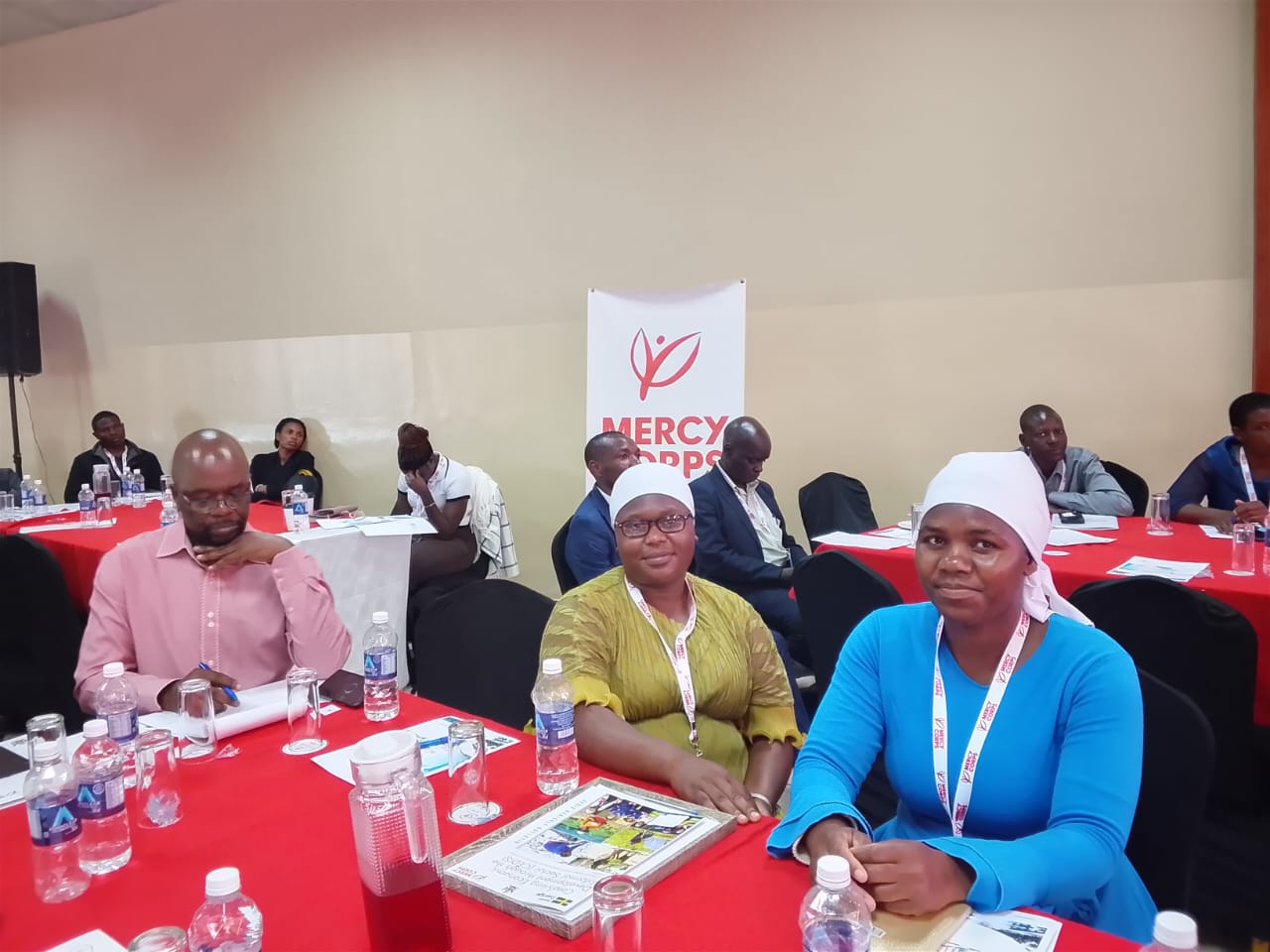
From “No-Work” to Prosperity : Apostolic Women Rise Through CIDES and Faith Fueled Entreprenearship
By Elizabeth Kucherera
For men in apostolic sects, allowing women to go to work is often a non-starter citing religious authority and cultural expectations as the reasons.
But for the women of Valley of Queens from the African Apostolic Church (Mwazha) sect, it is a different story.
Valley of Queens company is a group of 12 stakeholders who specialise in making multipurpose cleaner, dip toilet cleaner, toilet cleaner, glass cleaner, floor polish, foam bath, petroleum jelly, diluted drinks, engine cleaner, and degreaser.
At the programme’s close-out ceremony recently held in Mutare , Petronella Ziyadhuma an apostolic member of Mwazha Church stood firm on the podium and shared how her group’s lives changed after they were linked with Phamre Manufacturers, a partner under the Catalysing Economic Development through the Informal Sector (CIDES) programme.
Dressed in a well-dignified white doek on her head, she told guests with quiet conviction and some amazement that women from apostolic sects can do more than people assume.
“We started with only two products—pine gel and dishwash. It was not easy for us to be here. At first we did not have much, but we believed we could make it work,” said Mrs Ziyadhuma.
Their turning point came when they were connected with Phamre Manufacturers, a partner under the CIDES programme.
“Through this partnership we received practical training in detergent production. They taught us simple and effective ways to produce. Before, our products were not consistent,” she explained, describing how confidence grew alongside quality.
With support from CIDES, the director of Valley Queens, Mrs Ziyadhuma, and other shareholders formalised their business turning what began as small informal work into a structured enterprise that could grow, be trusted, and receive customers beyond their immediate circle.
Today, the group supplies orders to more than five schools in Mutare an achievement that feels bigger than profit, because it is also proof.
“We used to worry about whether anyone would trust our products, but now people are ordering again and again,” she said, her voice reflecting both struggle and pride. “That is when we knew we were rising.”
The story of rising did not end with Valley of Queens.
Chiedza Gwaku, another 28-year-old from Mutare, narrated how the CIDES programme transformed her small business from about US$20 profit to more than US$100 profit.
“I owned a tuckshop without a fridge. It was difficult to sell cold drinks, and I could only get US\$20 profit. I then opted to buy a fridge through support from CIDES,” said Mrs Gwaku.
With improved ability to store and sell, she expanded her range now selling sausages, cold drinks, and chicken cuts.
“My profits rose from US$20 to more than US$100 per week,” she said.
She also thanked the Ministry of Women for working with them tirelessly whenever they needed assistance because for many women, support is not only funding; it is encouragement, guidance, and access to the right connections.
Another voice echoed the same hope Jonga, a young mother from Bulawayo who works as a litter picker.
She said she started with one sack of litter, and through the CIDES programme she benefited by connecting with other women in the same field.
“I recruited other ladies in this field, and I sometimes buy litter from them so I can sell mine in bulk,” Jonga said. “It was not easy, but through resources from CIDES I now employ people in this type of business.”
For women in apostolic sects, these businesses carry deeper meaning than economic activity. Many start from a place of limited options pressed by expectations that women should remain within certain roles. Yet, as the women in these groups learned skills, gained mentorship, and received practical resources, the story shifted.
Formal business became a pathway that allowed apostolic women to participate in Zimbabwe’s economy while still preserving their identity, dignity, and values. Instead of simply “helping at home,” they became producers, suppliers, sellers, and employers—earning income, building credibility, and showing that faith and enterprise can coexist.
The Swedish Government funded the programme, which was implemented by Mercy Corps. It supported enterprises in Harare, Bulawayo, Mutare, and surrounding rural communities through business development, financial inclusion, and market access interventions.
Minister Mutsvangwa said women and youth-led enterprises in agro-processing, waste management, renewable energy, and manufacturing benefited from skills development and expansion opportunities.
“Women remain central to Zimbabwe’s socio-economic transformation. Through targeted support to women entrepreneurs, women-led cooperatives, and women participating in key value chains, CIDES has demonstrated the important role women play in driving economic growth,” she said.
She urged stakeholders to keep investing in women-owned enterprises and to keep creating opportunities for young entrepreneurs beyond the programme.
“The lessons emerging from the CIDES Programme demonstrate that sustainable development outcomes are achieved when Government, development partners, financial institutions, the private sector, and communities work together towards a common goal,” Minister Mutsvangwa said.