France Vs Spain: A Semifinal Shadowed By Racism’s Ugly Return
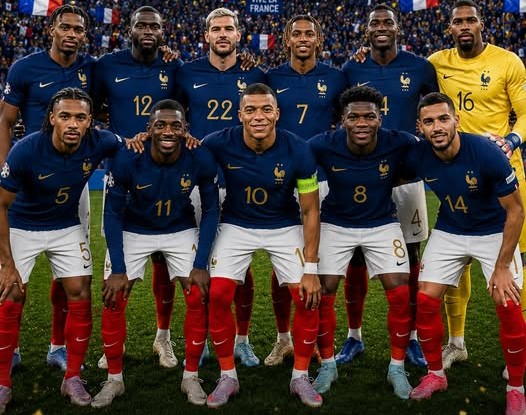
The French national team rated No. 1
Dallas – In the blazing Texas heat of Arlington’s Dallas Stadium on Tuesday, two European giants collide in a 2026 World Cup semifinal that feels more like a final.
France, chasing a third consecutive World Cup final appearance, against Spain, the reigning European champions riding a wave of defensive steel and youthful brilliance.
On paper, it’s football at its pinnacle: Kylian Mbappé’s explosive pace and clinical finishing against Lamine Yamal’s generational talent and a Spanish side that has conceded just once all tournament.
Yet the build-up has been poisoned by a racism row that has spilled far beyond the pitch, exposing old fault lines about identity, belonging, and the multicultural reality of modern national teams. (Source: cbssports.com)
The footballing context is electric.
France enter unbeaten, ranked No. 1, with a squad blending superstar quality and depth. Mbappé, fit after an ankle concern, has been in ruthless form.
Spain, meanwhile, embody their “tiki-taka” evolution under Luis de la Fuente—high pressing, technical mastery, and a blend of veterans and wonderkids like Yamal, who turns 19 around the match.
Recent history favours Spain slightly; they edged France 2-1 in the 2024 Euros semifinal.
But Les Bleus have looked formidable, winning every game.
Predictions lean toward goals—over 2.5 is popular—with France slight favorites to advance.
The winner faces the England-Argentina survivor in what could be a dream final (Source: sportsline.com)
Yet the pre-match narrative has been hijacked by controversy.
Just days before kickoff, Spain’s former Prime Minister Mariano Rajoy, in a column for El Debate, praised France’s “top-level squad” and unbeaten run but delivered the sting: “That said, they don’t have any French players. And they’re playing very well.” (Source: theguardian.com)
Former Spanish Prime Minister Mariano Rajoy is facing accusations of racism after stating in a newspaper column that the French national football team “does not have any French players”.
The remark ignited fury.
French officials across the spectrum condemned it as racist.
Interior Minister Laurent Nuñez called it “completely unacceptable,” emphasising France as “a country of diversity where everyone can thrive.”
Socialist leader Olivier Faure stressed that France is a “political nation,” not an ethnic one.
Overseas Territories Minister Naïma Moutchou highlighted a pattern of “methodical and normalised hatred.”
The French Football Federation’s president, Philippe Diallo, rejected any need for a “nationality certificate” from a foreign politician.
The French Embassy in Madrid issued a factual rebuttal: all 26 players are French citizens, 23 born in France. (Source: theguardian.com)
In Spain, current Prime Minister Pedro Sánchez slammed the comments as “xenophobic,” writing on X: “There are those who still measure belonging by surname, place of birth, or skin colour… May the best team win and may racism lose.”
Transport Minister Óscar Puente was blunter, labeling Rajoy a “post-Francoist idiot.”
The episode echoes longstanding debates in European football about immigration and integration, made sharper because Spain’s own squad features similar diversity—think Yamal (Spanish-born with Moroccan and Equatorial Guinean roots) and Nico Williams. (Source: france24.com)
This row lands just a week after an even uglier incident involving Paraguayan Senator Celeste Amarilla.
Following France’s round-of-16 penalty shootout win over Paraguay, Amarilla unleashed a torrent of racist abuse at Mbappé on social media, calling him a “brute,” “colonised Cameroonian,” and worse—mocking his origins, education, and appearance with dehumanising tropes like sucking on coconuts and learning from chimpanzees.
Mbappé hit back forcefully, branding her a “despicable woman unworthy of her office.” French prosecutors opened an investigation into aggravated public insult and incitement to hatred.
Paraguay’s Senate passed a motion condemning her “discriminatory and racist expressions,” though Amarilla doubled down in parts of her defence before claiming a hack on one platform. (Source: nytimes.com)
The timing has amplified outrage.
French Communist leader Fabien Roussel linked the two episodes: “They just can’t stop themselves from slinging this disgusting racism.”
Le Monde ran an editorial decrying Rajoy’s words as racist amid a tournament already marred by such attacks.
The incidents underscore a recurring pattern: success by diverse teams like France’s often triggers backlash from those clinging to narrower definitions of national identity.
Player reactions have been measured but pointed.
Pau Cubarsí called for tolerance.
Mbappé, no stranger to such vitriol, has focused on the pitch while previously condemning racism in strong terms.
Spanish players, products of La Masia and a multicultural system, largely embody the inclusive ethos Sánchez defended.
Yamal and others represent Spain’s evolving identity, much like France’s squad reflects decades of immigration from Africa, the Caribbean, and beyond.
Spain’s broader stance, voiced by its government, rejects Rajoy’s framing while some conservative voices have defended it as cultural commentary rather than racism.
The divide mirrors European political tensions, but football often serves as the arena where these debates play out most visibly—and divisively.
As the teams step onto the field, the stakes transcend sport.
A thrilling, open contest could showcase the best of the beautiful game: flair, resilience, and shared excellence.
France’s attacking firepower versus Spain’s defensive organisation and midfield control promises drama.
Yet the off-field noise serves as a reminder that in 2026, even as nations unite behind their teams, questions of who truly “belongs” persist.
May the best team win on Tuesday.
And, as Sánchez said, may racism lose—decisively.
The semifinal offers catharsis on the pitch, but the wider conversation about identity in sport and society will linger long after the final whistle in Texas.