
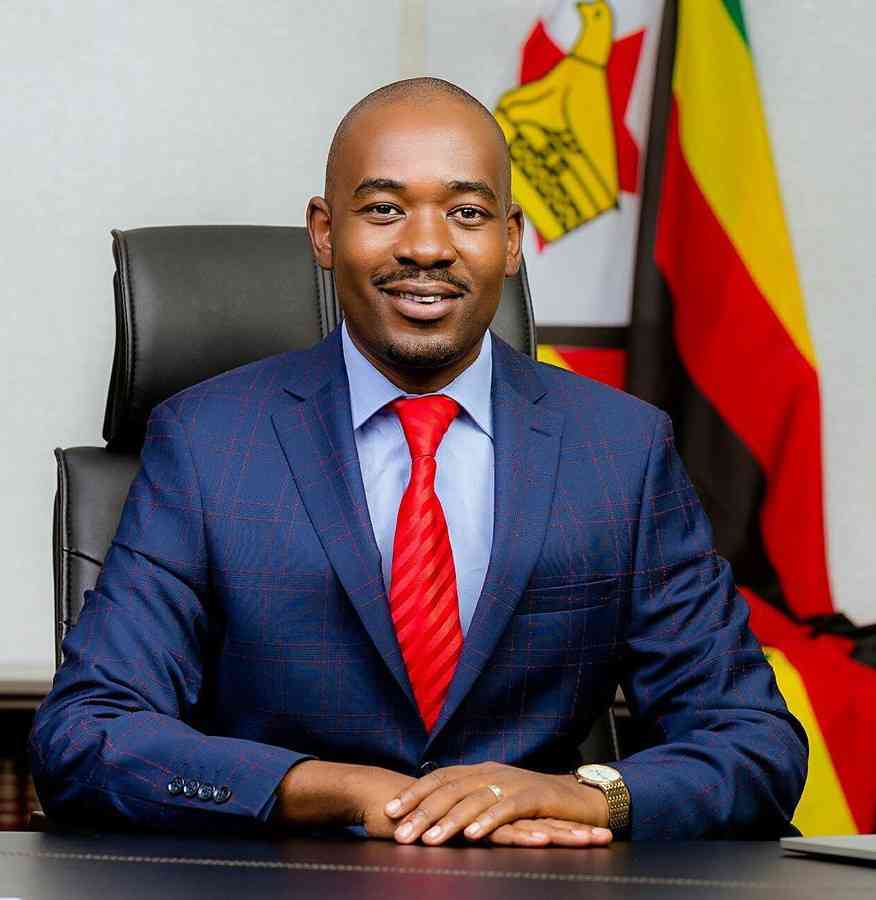
‘They Are Afraid of Us’: Chamisa Claims Mnangagwa’s CAB3 Law is Driven by Political Fear
Staff Reporter
HARARE — Opposition leader Nelson Chamisa has boldly claimed that the
government’s controversial enactment of the Constitution of Zimbabwe
Amendment (No. 3) Act—popularly known as CAB3—is a direct sign of
political vulnerability, asserting that President Emmerson Mnangagwa’s
administration is fundamentally “afraid” of the alternative political
force.
The high-stakes legislative overhaul was officially signed into law on
Tuesday following a fast-tracked parliamentary process. CAB3
fundamentally alters Zimbabwe’s governance framework, extending the
terms of office for the presidency, parliament, and local authorities
from five to seven years, thereby anchoring President Mnangagwa’s
current tenure through 2030. Crucially, the law removes the direct
popular election of the president, pivoting instead to a system where
the head of state is chosen via a joint parliamentary sitting.
In a direct address targeting a deeply anxious public and diaspora
base, Chamisa explicitly framed these massive structural changes not
as an exhibition of state strength, but as a defensive reaction born
of administrative panic.
“What the regime is doing by signing CAB3 is afraid of us,” Chamisa
declared, positioning the ruling party’s legislative maneuver as a
tactical retreat from direct democratic competition. “That’s why we
have to remain strong and confident. I’m coming back to this issue.
God is in it.”
The former opposition leader sought to reshape the narrative
surrounding the new law, telling supporters that the regime’s sudden
institutional adjustments prove the opposition still commands a
decisive popular mandate. He reassured citizens that their political
efforts have not been neutralized, stating, “We won this country long
ago and it belongs to us, and we still have it, and we will solve the
crisis.”
While using the “fear” angle to rally psychological resilience among
his followers, Chamisa simultaneously pleaded for strategic patience,
acknowledging the visible shockwaves the law has sent through the
electorate. He urged his base to refrain from rash reactions despite
widespread disappointment.
“I come to you with this very short message,” Chamisa said. “I have
heard a lot of concerns and complaints from all over, even the
diaspora… I was so disappointed that he signed the CAB3 into law.
But I say to you, wait, don’t be afraid.”
Invoking biblical references to contextualize the current political
landscape, Chamisa compared the country’s socio-economic hardships and
the introduction of CAB3 to the tribulations of King Nebuchadnezzar.
He insisted that national trials frequently precede systemic
transformation. “As planning in the Bible, Nebuchadnezzar was supposed
to suffer first before living in good times,” he remarked. “I will
return when the time comes. Please be patient. We cannot rush because
we are in extreme poverty, which we are in for sure… It’s not easy
for the support you gave me to be just awashed.”
While Chamisa strongly argues that state anxiety drove the legislative
overhaul, government officials and ruling party proponents present a
starkly different rationale, maintaining that the changes are anchored
in administrative foresight rather than political insecurity.
According to government spokespersons, the expansion to a seven-year
governance cycle is a strategic measure designed to insulate the
nation’s economy from the continuous friction and polarization of
frequent elections. Proponents argue that the amendments ensure
institutional stability, allowing the executive to focus on long-term
development targets under Vision 2030 without the constant disruption
of electoral cycles.
Furthermore, pro-government analysts point to the overwhelming
legislative support the bill received as validation of its legitimacy.
CAB3 comfortably cleared its constitutional hurdles, securing an
83.72% majority in the National Assembly—with 216 votes in favor to
just 42 against—before progressing through the Senate. From the
state’s viewpoint, this decisive parliamentary consensus indicates a
collective legislative commitment to economic continuity over partisan
rivalry.
In sharp contrast, independent legal experts, civil society
organizations, and constitutional watchdogs have aligned more closely
with the concerns raised by the opposition, though focusing primarily
on institutional integrity rather than political psychology. Critics
warn that abandoning direct presidential elections significantly
dilutes public franchise and undermines the constitutional checks and
balances established in 2013. They also point to clauses that widen
executive power, such as allowing the president to directly appoint
ten additional senators, alongside alterations to judicial
appointments, as moves that centralize authority.
By interpreting the enactment of CAB3 as a manifestation of state
fear, Chamisa is attempting to maintain political momentum and keep
his support base intact during a massive structural transition. With
the law now fully active and the electoral landscape fundamentally
transformed ahead of 2030, the ongoing debate centers on whether these
reforms will deliver the stability the government promises or
reinforce the political anxieties the opposition claims to have
exposed.