
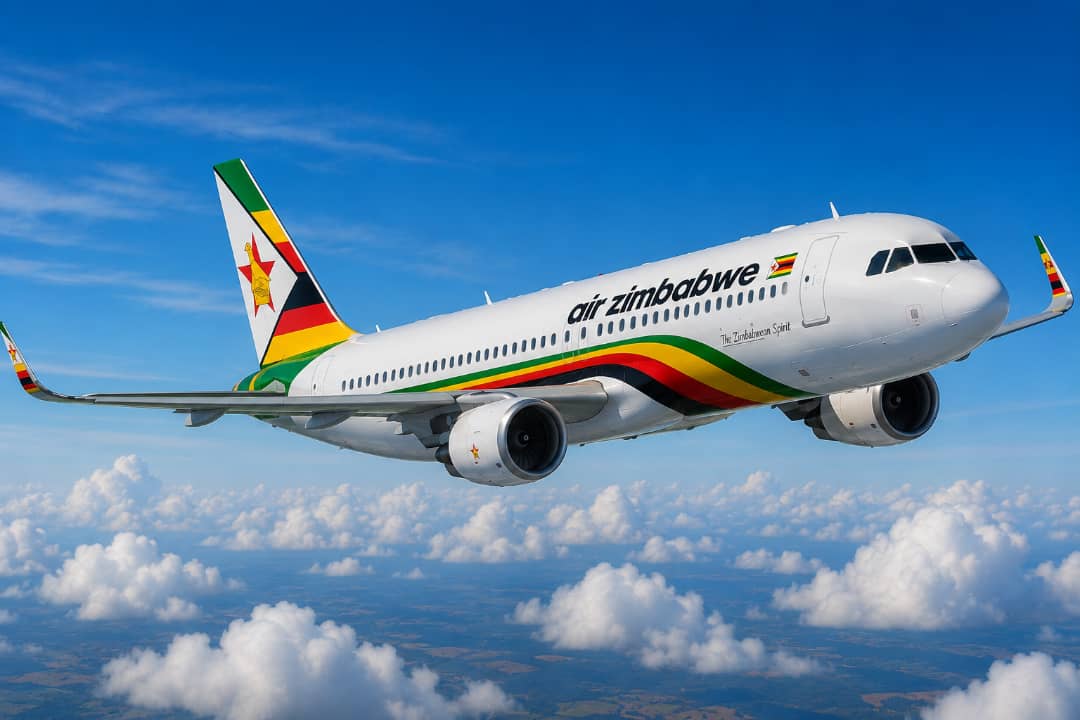
WET LEASE TODAY, WINGS TOMORROW: THE PATH TO REAL AIR ZIMBABWE REVIVAL
_By Chiyedzo Josiah Dimbo — Ambassador of Hope_
_“The System Starts With The First Step.”_
_HARARE_ — The news is good: _Harare to London Gatwick is direct again._
After 14 years of painful layovers, our people can fly home without sleeping in transit lounges.
That alone is worth celebrating. But as Cde Tendai Ruben Mbofana rightly pointed out, we must also tell the whole truth.
*WHAT IS REALLY HAPPENING*
Air Zimbabwe has entered a _13-month wet lease / ACMI deal_ with Spanish carrier _Plus Ultra Líneas Aéreas_.
– _Plus Ultra brings:_ The Airbus A330, Spanish pilots, cabin crew, engineers, maintenance, insurance.
– _Air Zimbabwe brings:_ The route rights, the tickets, the brand, the check-in desk.
In short: we are selling the tickets, but someone else is flying the plane. Mbofana’s bus analogy is correct. Renting a coach does not make you a transport company.
*SO WHY DO IT?*
Because _pragmatism beats pride_ when your people are suffering.
– _Test the market_ — Is there real demand Harare–London? Now we’ll know in 13 months. According to IATA, the UK–Zimbabwe passenger market was worth over $280 million in 2019 before COVID. Post-pandemic recovery has been slow, but diaspora remittances from the UK alone reached $900 million in 2023. Direct flights unlock more of that flow.
– _Restore connectivity_ — Diaspora remittances, tourism, business. Direct flights move money. Zimbabwe’s tourism sector lost an estimated $1.5 billion between 2020 and 2023 due to route gaps. A direct London flight can recover at least 20% of that over two years.
– _Buy time_ — While Air Zim fixes EU bans, debt, and grounded aircraft. The airline currently owes over $300 million to creditors. Its last Airbus A330 was repossessed in 2012. A wet lease is the fastest way to get a wide-body back in the air without upfront capital.
Wet leasing is used by Emirates, British Airways, and South African Airways too. It’s not shameful. It’s a tool.
*THE DANGER*
The danger is if we _confuse renting with owning_.
If in 13 months we have:
– No Zimbabwean pilots trained on wide-body jets
– No engineers certified on A330s in Harare
– No plan to buy or lease our own aircraft
– All the revenue leaving the country
…then we will be right back where we started. Just poorer.
_Case Study — Kenya Airways:_ In the early 2000s, Kenya Airways wet-leased Boeing 737s to launch new routes but built a rigorous skills-transfer programme with KLM. By 2015, they had fully localised maintenance and piloting for their fleet. Today, KQ is one of Africa’s most respected carriers, with a 70% local crew ratio on wide-body flights. Their route network employs over 4,000 Kenyans.
_Case Study — Ethiopian Airlines:_ The African giant started with a single wet-leased DC-3 in 1946. Every lease contract included mandatory training quotas. By the 1960s, Ethiopian pilots were flying jets. Today, Ethiopian operates 140+ aircraft, runs the largest aviation academy in Africa, and generates $6 billion in annual revenue. Their secret: _never lease without learning._
Air Zimbabwe can follow that path — if the contract is written with teeth.
*THE FIRST IMPORTANT STEP*
This wet lease must be treated as _Phase 1, not the finish line_.
The plan must be clear from day 1:
– _NOW: WET LEASE_ — Prove the route works. Fill the seats. Generate cash. Target: 80% load factor within 6 months. At an average ticket price of $800, that’s $1.2 million per week in revenue.
– _YEAR 1–2: TRAIN_ — Send Zimbabwean pilots and engineers to train on A330s. Insist on skills transfer in the contract. Include a clause that Plus Ultra must certify at least 10 Zimbabwean pilots and 15 engineers by month 12. No exceptions.
– _YEAR 2–3: TRANSITION_ — Move to a “dry lease” or purchase. Put Zimbabwean crew in the cockpit. Dry leasing costs 30–40% less per month than wet leasing, and keeps all revenue from crew wages inside Zimbabwe.
– _YEAR 3–4: OWN_ — Clear the EU ban. Bring back Air Zimbabwe aircraft. Keep revenue and jobs here. The EU ban, imposed in 2017, can be lifted if Zimbabwe’s Civil Aviation Authority meets ICAO safety standards — a process that costs about $5 million and takes 18 months. That money can be earned from the wet lease itself.
_The system is the harvest._ You don’t start with a full fleet. You start with one route and a deliberate plan to build capacity.
*AMBASSADOR OF HOPE CONCLUSION*
Let us celebrate the direct flight. Our mothers in London can now come home easier. Our exporters can move goods faster — Zimbabwe exported $150 million in fresh produce to the UK in 2023, mostly via road to Johannesburg. Direct air freight could double that in three years.
But let us also demand accountability.
Don’t call it a “resurrection” yet. Call it _“The First Important Step.”_
The real resurrection comes when we see _Zimbabwean wings, Zimbabwean hands, Zimbabwean revenue_ in the sky to London.
Until then, let’s use this wet lease wisely.
_Rent today. Learn today. Own tomorrow._
Because _true wealth is in the sky too_ — if we build the system to capture it.